

As the title suggests, KLAS’ recent Clinician Turnover 2024 report shares insights on healthcare’s second epidemic post-COVID-19—clinician turnover. Up to this point, the KLAS Arch Collaborative has primarily focused on gathering the EHR experiences of clinicians at specific organizations and their levels of burnout.
The KLAS report dives deep into the relationship between a clinician’s EHR experience and their likelihood of staying at their current organization, or even in healthcare in general. Read on for more insights to see what we learned.
Points to Know
- Predictions indicate that the US will face widespread physician and nursing shortages in the next few years. This new report looks into where clinicians plan to go when they report their likelihood of leaving their organizations.
- KLAS partnered with healthcare organizations to review their turnover data from HR and correlated it with clinicians’ EHR experience. This helped us triangulate the clinicians’ overall EHR experience and understand retention within organizations and healthcare overall.
- Turnover potential is higher than ever, and healthcare organizations need to act quickly to retain clinicians.
- Clinicians with better EHR experiences are more likely to stay. Reduced burnout and enhanced EHR education were significant factors in retaining clinicians. Best practices from healthcare organizations that reversed turnover trends are included in the report.
Why the Arch Collaborative is Researching Turnover
Over the years, the Arch Collaborative has seen many healthcare organizations measure their clinicians’ EHR experience to improve the EHR for clinicians. Our insights gleaned over the years suggest that great support and training lead to better clinician experience. While it’s easy from there to believe that clinicians who have a good experience will stay in their organization, we have lacked the hard data to give concrete proof of ROI.
In 2018, we started measuring clinicians’ burnout levels to understand if the EHR was a contributor. We found it isn’t the primary factor—staffing shortages are. However, while clinicians’ EHR satisfaction and burnout are not the same thing, we quickly learned there is correlation between the two. We have now published a lot of insights around those findings.
But the healthcare organizations we were measuring wanted to know more about staffing challenges. Other media outlets have shared predictions that the US is going to have even more widespread physician and nursing staffing shortages in the next few years. These healthcare organizations wanted to understand if their clinicians were leaving, where they were going, and, if possible, whether they could change the clinicians’ minds.
KLAS aimed to better understand the relationship between the EHR experience and retention both within organizations and in healthcare overall. We also wanted to help healthcare organizations better justify investments in improving the EHR experience.
How We Approached Research
Thanks to a few healthcare organizations in the Arch Collaborative, we were able to review turnover data from their HR departments and correlate it with clinicians’ EHR experience results. For example, if a surveyed clinician told us that they were planning to leave, we could see in the turnover data whether they really left. This allowed us to triangulate their overall EHR experience.
Key Findings
First, we learned that the potential for turnover is higher than ever as an industry. Organizations have work to do to change the minds of clinicians who want to leave, and it needs to be done quickly. Healthcare organizations need to understand what matters to their clinical staff so they can attract and ultimately retain great talent.
On the flip side, many clinicians planning to leave their organization still report that they’re going to stay in healthcare, and that is great for the industry. Clinicians can also be choosy about where they work, evaluating benefits, flexibility, and organizations’ mission and leadership values.
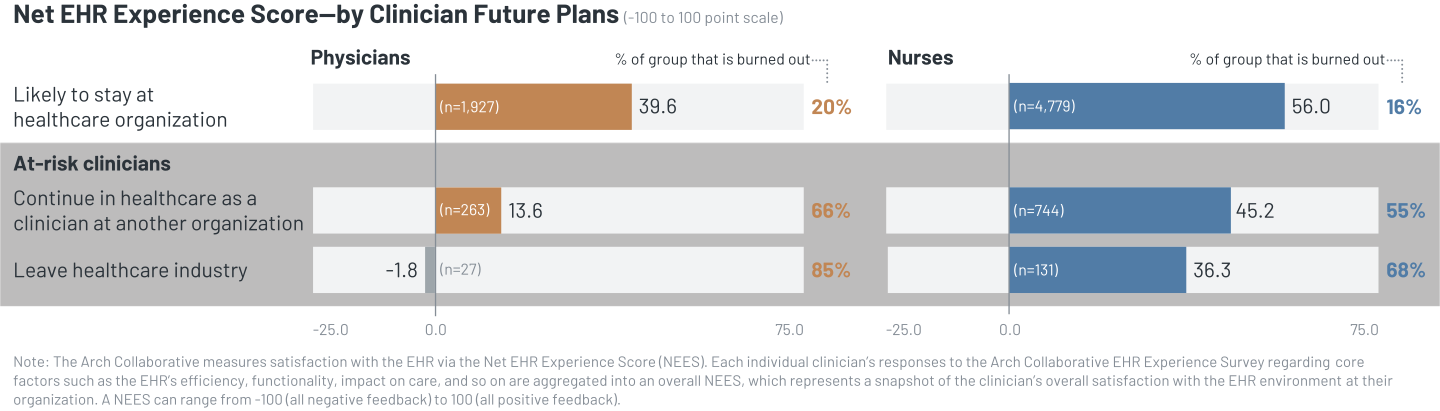
Second, there is a correlation between levels of burnout and the EHR experience score for the individuals who are going to stay versus the folks who are leaving the healthcare industry. Clinicians with better EHR experiences are more likely to stay. For example, physicians planning to stay had an average Net EHR Experience Score of 39.6 (on a scale of -100 to 100), while those planning to leave had lower scores and higher burnout rates.
Third, some clinicians who initially planned to leave changed their minds after reducing their feelings of burnout and receiving enhanced EHR education. Some clinicians have taken our survey multiple times, and we can track their experience over time. Reducing burnout is a nebulous, really difficult challenge to tackle; however, providing great EHR education is a more tactical thing that can make a big difference.
There is Something You Can Do
I love writing Arch Collaborative reports because they show the state of the industry and offer solutions. While we can’t fix complex healthcare challenges or staffing shortages overnight, we can control certain factors. Together we can help make sure that technology is not a barrier to clinicians and that it is instead an enabler to them providing patient-centered care.
I recommend reading the report to learn from candid clinician comments on this topic and to take in best practices from healthcare organizations that were able to reverse their clinician turnover trends.


